The Water for Climate Pavilion has released a position paper outlining seven recommendations for COP31. It sets out how climate negotiations can strengthen water security through adaptation, mitigation, finance and national planning, helping turn water commitments into measurable action.
Water shapes how people experience climate change, from floods and droughts to shifting rainfall and rising seas. It also supports climate solutions: reliable water supplies underpin adaptation and energy systems, while wetlands and other water-dependent ecosystems store carbon. Yet decisions affecting water remain spread across climate negotiations, making it difficult to coordinate investment, track progress and account for the full water cycle.
The position paper, Water at the centre of implementation: A cross-cutting agenda for COP31, translates the Water for Climate Pavilion partners’ shared position into concrete proposals for negotiators and Presidency teams.
Seven recommendations for COP31
The paper identifies seven opportunities to strengthen water’s role in climate policy and implementation:
- Track water resilience coherently. Bring water-relevant indicators together under the Global Goal on Adaptation to help countries report on water availability, resilient water and sanitation services, and disaster preparedness.
- Make water finance visible. Recognize water security infrastructure as an explicit, trackable category within adaptation finance reporting.
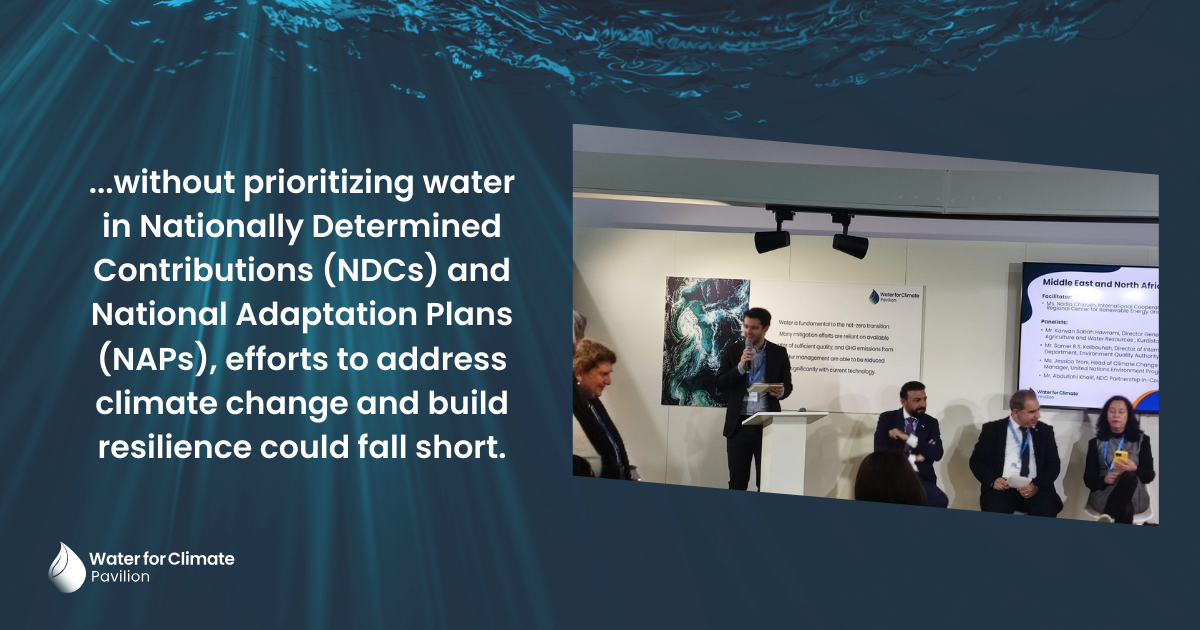
- Strengthen national climate plans. Develop guidance on aligning nationally determined contributions with water security and the water cycle.
- Connect adaptation planning with investment. Align National Adaptation Plans with climate commitments and finance to develop investable projects reflecting local priorities.
- Coordinate climate, biodiversity and land action. Establish a follow-up mechanism to promote coherent implementation on water across the three Rio Conventions.
- Improve evidence for loss and damage funding. Recognize hydrological monitoring data, including flood and drought indices, as evidence supporting funding requests.
- Advance blue carbon with water safeguards. Accelerate approval of blue carbon crediting methodologies and require disclosure of hydrological benefits and risks for land- and coastal-based mitigation projects.
Connecting decisions with delivery
These recommendations address practical gaps between climate commitments and implementation. Fragmented indicators make it harder to assess water resilience as a whole. Limited visibility within finance reporting makes water investment difficult to track, while gaps in monitoring can constrain countries’ ability to document climate-related losses.
The paper also calls for closer coordination across climate, biodiversity and land policies. Shared water baselines, joint indicators and integrated national planning can help countries account for the connections between ecosystems, land use and water resources.
Looking ahead to the UN 2026 Water Conference
The paper positions COP31 as an opportunity to inform the UN 2026 Water Conference in December. Its central call is for water to be planned, financed and measured coherently across policy agendas, supporting stronger implementation at national and local levels.
Read the position paper